
Why More L&D Units are Adding Birth Tissue Collection — Without Adding to Your Workload
A no-cost program that gives your patients a meaningful choice and your unit something worth talking about.
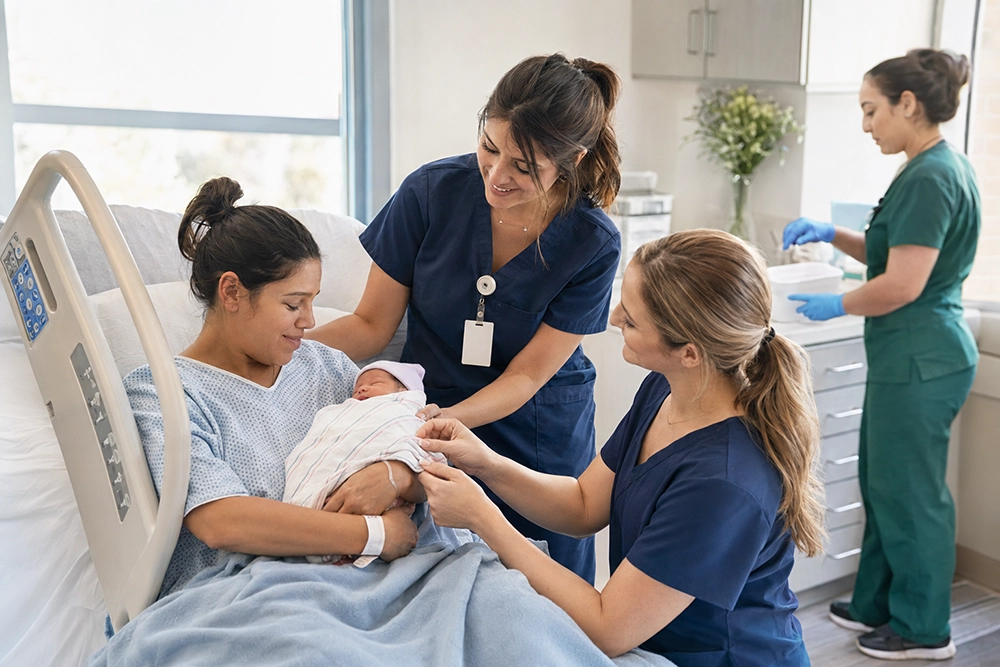
You’ve seen firsthand how much the landscape of labor and delivery care has shifted. Patients arrive informed, connected, and looking for hospitals that align with their values — not just their insurance network. They want to birth somewhere that sees them as whole people, not just a procedure.
Birth tissue collection programs are making that possible — and the best ones feel like a natural extension of the care you already provide. Life Line Stem Cell’s program was designed with your team in mind from day one: no added cost, and no disruption to the work that matters most.
Here’s what it actually looks like when a hospital partners with Life Line, and why L&D teams who’ve made the switch describe it as one of the most meaningful — and operationally invisible — additions to their unit.
What Life Line’s Program Actually Requires of Nursing Staff
Let’s start with the question every charge nurse asks first: What will my team have to do?
The answer is minimal — by design. The three things that may involve your nursing staff:
- Possible support with the Donor Disclosure Release (DDR) form — a brief nursing signature, only when applicable
- Collection of the mother’s blood sample, as required by FDA guidelines — a standard draw that integrates into existing postpartum workflows
- Designated space for Life Line staff to collect birth tissue after placenta delivery
That’s it. Life Line’s trained team handles everything else: consent conversations, patient education, collection, logistics, and transport. They work alongside your team, not through it.
The Clinical Value Your Patients Are Already Asking About
Expectant mothers are researching cord blood donation before they arrive at your hospital. They’re asking their OBs. They’re posting questions in birth planning groups. Many are actively choosing their birth location based on whether donation is available.
By partnering with Life Line, your unit gives patients something they’re already seeking — without your team having to become experts in cord blood biology. Here’s the clinical context worth knowing:
Cord Blood
Umbilical cord blood is a rich, non-invasive source of hematopoietic stem cells used to treat more than 80 diseases, including leukemia, lymphoma, sickle cell disease, aplastic anemia, and a range of immune and metabolic disorders. Cord blood transplants have been performed for decades and remain a cornerstone of treatment for blood-based malignancies.
Placental (Amniotic) Tissue
Amniotic membrane collected from the placenta has demonstrated significant clinical utility in wound care, burn treatment, surgical recovery, and ophthalmology. Its anti-inflammatory and anti-scarring properties make it valuable across multiple specialties — and it’s already in active clinical use at hospitals nationwide.
When your patients donate, their tissue doesn’t sit in storage. It goes directly into the supply chain that supports patients who need it.
What This Means for Your Unit’s Identity
The competitive landscape for maternity services is real. Birth volume matters. And the factors that drive expectant families to choose one hospital over another are increasingly tied to values and services, not just proximity.
A birth tissue collection program signals something important: this hospital is invested in the future of care.
It differentiates your maternity program in a way that resonates with the patients most likely to be loyal, engaged, and vocal advocates. It positions your L&D unit as a leader in community health and innovative care — without a capital investment, a staffing change, or a line item in the budget.
For staff, it adds a layer of purpose that matters too. Nurses who work in L&D often describe their work as a calling. A program that turns every birth into a potential act of healing for someone else — a cancer patient, a burn survivor, a child with a blood disorder — connects to that calling in a profound way.
How Life Line Handles Implementation
Life Line’s implementation model is built around one principle: no added operational burden. Here’s what that looks like in practice:
Turnkey Onboarding
Life Line’s experienced team manages the full setup process, including staff education, protocol alignment, and logistical planning. Your team learns what they need to know, and nothing more.
On-Site Life Line Staff
Life Line team members are present at the hospital to manage consent and collection. They work within your existing space and workflow, coordinating directly with your L&D team without disrupting patient care..
Patient Education Materials
Life Line provides pre-registration materials and patient-facing educational resources so mothers arrive informed. Your staff doesn’t need to initiate the conversation from scratch.
FDA-Registered Standards
As an FDA-registered organization, Life Line operates under rigorous compliance standards. Your hospital benefits from that credibility without carrying the regulatory burden.
What Hospital Partners Are Experiencing
Life Line currently works with 23 hospital partners — and the feedback from clinical teams is consistent: the program delivers on its promise of being operationally seamless while creating genuine value for patients and staff alike.
The impact is sustainable too. Every collection contributes to the broader supply of birth tissue used in life-saving treatments and to the ongoing research that is advancing regenerative medicine. Hospitals that partner with Life Line aren’t just offering a service — they’re participating in the future of care.
Starting the Conversation
If you’re an L&D director, clinical educator, or hospital administrator exploring what a birth tissue collection program would look like in your unit, Life Line’s team is ready to walk you through every detail.
There are no fees, no contracts with hidden obligations, and no obligation to commit before your questions are answered.
Call: (260) 749-9105
Email: information@lifelinestemcell.org
Visit: lifelinestemcell.org
Where every birth has the power to heal.
Latest Posts
- From the Delivery Room to the Operating Table: How Birth Tissue Is Transforming Healing
by Life Line Stem Cell - Why More L&D Units are Adding Birth Tissue Collection — Without Adding to Your Workload
by Life Line Stem Cell - What Happens to Your Baby’s Cord Blood After Delivery — And Why It Matters
by Life Line Stem Cell